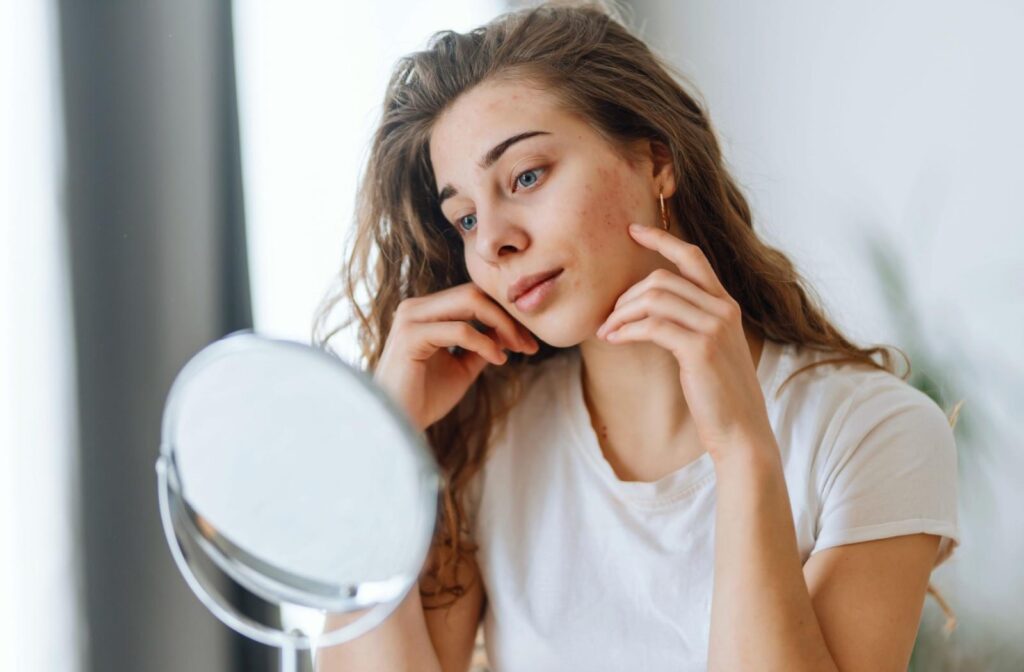
Maybe you notice a persistent blush across your cheeks that doesn’t seem to fade. Sometimes, this redness can feel warm or even uncomfortable. At Advanced EyeCare & Aesthetics, our team understands that you may be wondering what it is and what other symptoms can accompany the redness.
This might be a sign of rosacea, which can involve an itching sensation along with burning or stinging on the skin. This discomfort is a common experience for many who live with the condition, and may be managed with a range of treatments, which can include options like IPL therapy in some cases.
Signs and Sensations of Rosacea
More Than Just a Blush
Rosacea shows up differently for everyone, but some common signs can appear on your face. It can be helpful to know what to look for so that you can understand what’s happening with your skin.
You may have rosacea if you notice:
- Persistent redness or facial flushing
- Visible small blood vessels
- Small bumps or pimples
The Itch, Burn, and Sting
Beyond what you can see, rosacea also creates distinct physical sensations. These feelings can range from mildly annoying to very uncomfortable and distracting. Your skin might feel sensitive to the touch or react to your daily skincare routine.
Rosacea can also feel like:
- A persistent itchy or irritated feeling
- A stinging or burning sensation
- Skin that feels tight or swollen
How Rosacea Can Affect Your Eyes
Rosacea doesn’t just affect your skin: It can also impact your eyes. This is known as ocular rosacea, and its symptoms can cause significant discomfort. You may have ocular rosacea if you notice:
- A dry, gritty, or scratchy feeling
- Red, swollen, or crusty eyelids
- Blurry vision or sensitivity to light
These symptoms often overlap with or contribute to dry eye, which is why getting an eye exam is important for an accurate diagnosis.
Common Conditions Mistaken for Rosacea
Several other skin conditions share signs similar to rosacea, which can make it tricky to figure out the source of your irritation. Because the symptoms can overlap, it’s easy to mistake one for another. Knowing about these look-alikes can help you understand why a clear diagnosis is so valuable.
Some of the conditions that have similar symptoms to rosacea include:
- Adult acne breakouts
- Allergic skin reactions
- Autoimmune conditions (like lupus)

Simple Ways to Soothe Rosacea Flare-Ups
Identify Your Personal Triggers
Managing rosacea often starts with discovering what causes your skin to react. Paying attention to your daily habits and environment can help you connect the dots. You may be able to notice patterns by keeping track of when your symptoms appear.
Some of the common triggers can be factors like:
- Sun exposure and extreme temperatures
- Spicy foods, alcohol, or hot drinks
- Stress or certain skincare products
Adopt a Gentle Routine
How you care for your skin every day can make a difference. A gentle approach helps protect your skin’s barrier and can reduce irritation. It’s generally a good idea to use mild, fragrance-free cleansers, apply moisturizer and sunscreen every day, and look for products recommended for sensitive skin.
When to Get a Professional Opinion
If your symptoms don’t improve with simple changes or if they start to interfere with your daily life, it may be time to speak with a professional. This is especially true if you notice any changes in your eye comfort or vision.
What a Consultation Involves
We design our consultations to be a straightforward conversation focused on you. Our goal is to understand your unique experience and symptoms so that we can get a clear picture of your skin and eye health. Our eye doctor can then create a personalized care plan for your unique needs.
Schedule a Consultation
Our team at Advanced EyeCare & Aesthetics wants to help you understand and manage your rosacea together. You don’t have to deal with the symptoms alone. If you’re interested in managing your skin with a team of professionals, schedule your consultation today.