
You’ve finally gotten your breakouts under control. But the marks left behind, the little craters, the flat dark patches, are still staring back at you in the mirror. This may make you wonder if they’ll ever go away on their own.
Some minor discoloration can fade over time, but most True acne scars, the kind that change the texture of your skin, usually need treatment to see meaningful improvement. The good news is that there are real options available, and knowing what type of scarring you’re dealing with is the first step toward addressing it.
What Acne Scars Actually Are
When a breakout heals, your skin works to repair the damage. That repair process depends on collagen, the protein that gives skin its structure. If the skin produces too little collagen, you’re left with a sunken or pitted area. Too much collagen, and you get a raised, thickened scar.
Dark spots are a different story. Those patches of brown or red discoloration are called post-inflammatory hyperpigmentation, and they aren’t true scars. They’re just the skin’s response to inflammation. They sit on the surface and can fade on their own, though it often takes longer than you’d expect. Deeper, structural scars don’t work the same way.
Severe or repeated breakouts tend to leave more noticeable marks. The more deeply inflamed the original pimple, the more disruption there is to the skin’s healing process.
The Main Types of Acne Scars
Not all acne scars look or behave the same way.
Depressed scars sit below the surface of the surrounding skin and show up most often on the face. A few variations fall under this umbrella:
- Icepick scars are narrow and deep, like a small puncture in the skin.
- Boxcar scars have wider, flat bases with defined edges.
- Rolling scars create an uneven, wavy texture across the skin.
Each type has a slightly different texture, and that difference matters when it comes to choosing the right treatment.
Raised scars, called hypertrophic or keloid scars, happen when the body overproduces collagen. You’ll find these more often on the chest and back than on the face, and they can feel firm or rubbery to the touch.
Dark spots tend to show up on the face, especially if you have a medium to deeper skin tone. Left alone, they can linger for a year or more. Sun exposure only makes them darker and slows the fading process, so wear your sunscreen.
Can Acne Scars Go Away on Their Own?
Minor redness and surface-level discoloration sometimes lighten over several months, particularly in younger skin. Don’t count on time alone to do the heavy lifting, though.
Deeper pitted or raised scars rarely improve without treatment. The structural change in the skin has already set, so waiting it out usually just means living with the scars longer than you need to.
Here’s one thing that genuinely slows healing: picking or popping breakouts. When you disrupt the skin that way, you increase inflammation and the chance of a more noticeable scar forming.
Let breakouts heal on their own instead, and give your skin a better shot at a cleaner recovery.
Treatment Options Worth Knowing About
A provider has several tools available, and the right one depends on the type of scarring you have and how your skin responds.
Laser Skin Resurfacing
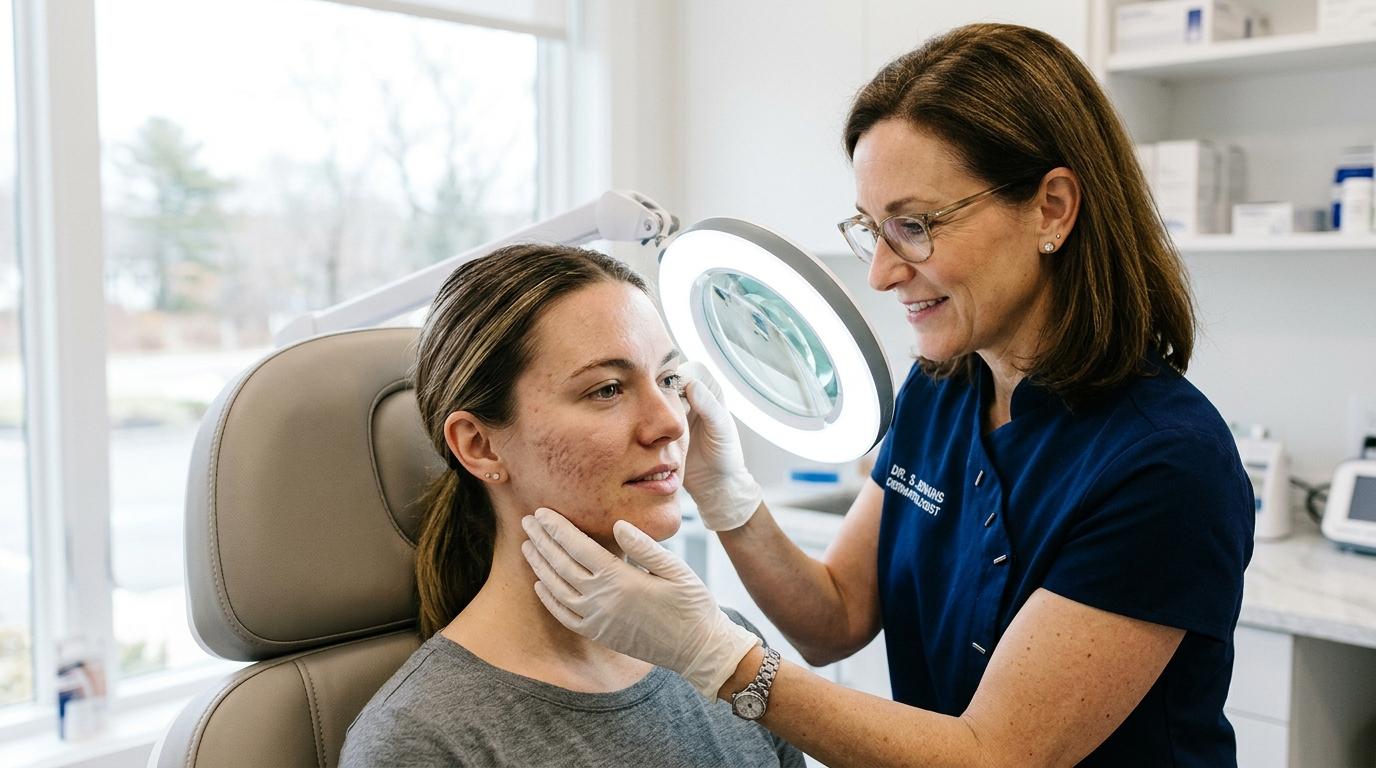
Laser skin resurfacing targets damaged layers of skin with focused light energy. The treatment works by removing the outer layers of skin so newer, smoother skin can take their place. It can help improve both depressed and raised scars, and it’s one of the more direct approaches for textural concerns. It can also help reduce the appearance of dark spots by targeting areas of uneven pigmentation.
Downtime and the number of sessions needed vary depending on your skin type and the depth of the scarring.
Other In-Office Treatments
A few other options may fit your skin’s needs:
- Microneedling creates tiny controlled punctures in the skin to trigger collagen production, which can help fill in pitted scars over time.
- Chemical peels use a carefully chosen solution to remove the surface layer of skin and reduce the look of dark spots and shallow scarring.
- Dermal fillers can temporarily add volume beneath depressed scars to make them less noticeable.
- Radiofrequency treatments use energy to tighten skin and support collagen around deeper scars.
How Long Does It Take to See Results?
Dark spots can start to lighten within a few months of consistent treatment. Structural scars take longer, often several months to a year or more, depending on the approach.
Most in-office treatments call for more than one session, and that’s by design. Skin remodeling happens gradually, and spacing out your visits gives your skin time to respond and recover between them.
Your skin type, the depth of the scarring, and how long you’ve had it all affect how quickly you’ll notice changes. Build a plan around your specific skin rather than reaching for a one-size-fits-all approach.
Ready to Talk About Your Skin?
Acne scars can feel permanent, but you have options worth exploring. Whether you’re dealing with textural scars or stubborn dark spots, a personalized plan can help you map out a realistic path forward.
At Advanced Eye Care and Aesthetics, the team works closely with you to find the right combination of treatments for your skin goals. Schedule a consultation today and take the first step.